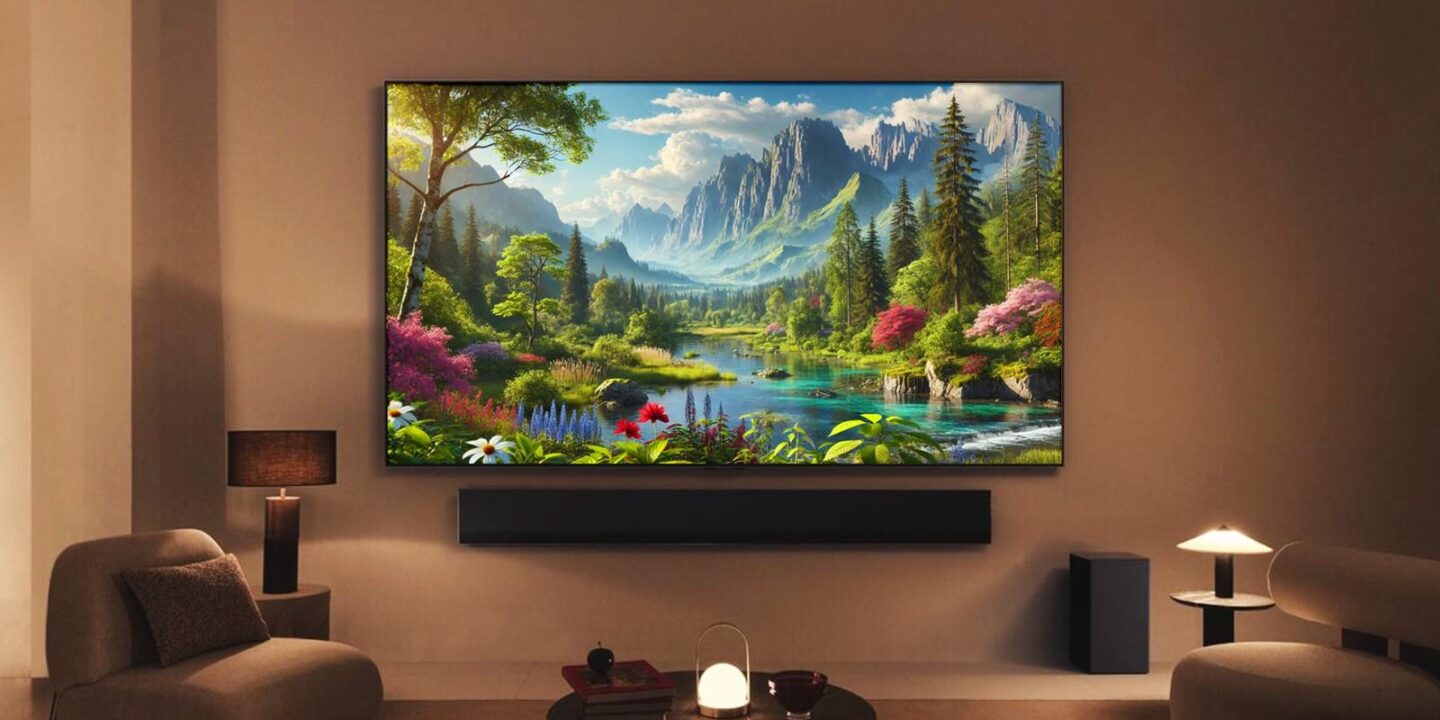
Smart TVs in Nigeria: OLED vs QLED vs LED – Which TV Should You Buy?
Buying a new television is no longer just about choosing a screen that is big enough for your living room. Today, shoppers looking for Smart TVs in Nigeria have several options, including LED, OLED, QLED, 4K, Android TV and Google TV models. Each technology offers different benefits, and the right choice depends on your budget, viewing habits, room conditions and the features you need.
Perhaps you want a television for watching football, streaming Netflix, enjoying Nollywood films, playing video games or keeping the family entertained. You may also be wondering whether an OLED TV is better than a QLED TV, whether a 4K television is worth buying, or whether every Smart TV can connect to the internet.
These are important questions to consider before making a purchase.
At GrowMarketPlus, you can explore home entertainment options and compare available television models to find one that suits your space and budget. In this guide, we explain the main TV technologies in simple terms, highlight the features that matter most and help you make a more informed buying decision.
What Is a Smart TV?
A Smart TV is a television that connects to the internet and supports applications or connected services. Depending on the model and operating system, you may be able to stream films, watch online videos, listen to music and access other entertainment applications directly from the television.
For example, instead of connecting a laptop every time you want to watch a film online, you may be able to open a supported streaming application on your TV.
However, Smart TVs do not all offer the same features. Some run Google TV or Android TV, while others use different operating systems. The available applications, interface, voice controls and casting features can vary by model.
Before buying a Smart TV, check the following:
- Operating system: Confirm whether the TV uses Google TV, Android TV or another platform.
- Application support: Make sure the streaming services you use are available.
- Internet connectivity: Check whether the model supports Wi-Fi and whether it also has an Ethernet port.
- Screen resolution: Decide whether Full HD or 4K resolution suits your needs.
- Connectivity: Check the number of HDMI and USB ports.
- Warranty: Review the warranty terms and available after-sales support.
Remember that a Smart TV still needs a suitable internet connection to stream online content. Some services may also require a paid subscription.
What Is the Difference Between LED, OLED and QLED TVs?
LED, OLED and QLED describe different approaches to producing the picture you see on your television.
Understanding these terms makes it easier to compare models without getting confused by marketing language.
LED TVs
LED TVs generally use an LCD panel illuminated by LED backlighting. They are widely available in different screen sizes and price ranges.
For many Nigerian households, an LED Smart TV can be a practical option for everyday entertainment, including watching television programmes, football, films and online videos.
Depending on the model, you may find Full HD or 4K resolution, Smart TV applications, HDR support and different connectivity options.
Who should consider an LED TV?
An LED TV is worth considering if you want a television for everyday viewing, have a specific budget or need a range of screen sizes to choose from.
However, picture quality differs significantly between models. Brightness, contrast, colour reproduction, refresh rate and backlighting design all affect the viewing experience.
OLED TVs
OLED stands for Organic Light-Emitting Diode. Unlike a conventional LED-backlit LCD television, an OLED TV uses pixels that produce their own light.
Because individual pixels can switch off completely, OLED televisions can display very deep blacks and strong contrast. This makes them particularly attractive for film lovers and people who enjoy watching content in a dimly lit room.
OLED models can also provide wide viewing angles, although the exact performance depends on the panel and model.
Who should consider an OLED TV?
An OLED TV may be suitable if you priorities picture quality, cinematic viewing, rich contrast and dark-scene detail.
Nevertheless, OLED televisions can cost more than many standard LED models. If you watch television for long periods with static images displayed, you should also understand the manufacturer’s guidance regarding image retention and burn-in risk.
QLED TVs
QLED stands for Quantum Dot Light-Emitting Diode. In consumer televisions, QLED generally refers to an LCD television that uses quantum-dot technology to improve colour performance, usually alongside LED backlighting.
QLED TVs can produce vibrant colors and high brightness, making them attractive for brightly lit living rooms and daytime viewing.
However, not every QLED television offers the same contrast or brightness. Backlighting technology, local dimming, panel quality and other specifications make a difference.
Who should consider a QLED TV?
A QLED TV may be worth considering if you want vibrant colors, good brightness and an enjoyable viewing experience in a room with substantial daylight.
Before buying, compare the actual model’s brightness, contrast, HDR capabilities and refresh rate rather than relying on the QLED label alone.
OLED vs QLED vs LED: Which Is Better?
There is no universal winner because the best television depends on your priorities.
| Feature | LED TV | OLED TV | QLED TV |
|---|---|---|---|
| Picture technology | LCD with LED backlighting | Self-missive pixels | Quantum-dot LCD with backlighting |
| Black levels | Depend on panel and backlighting | Excellent pixel-level blacks | Depend on panel and backlighting |
| Bright-room viewing | Varies by model | Varies by model | Many models offer strong brightness |
| Colour performance | Varies by model | Often excellent | Quantum dots can deliver a wide colour range |
| Price range | Many budget-friendly options | Often positioned at the premium end | Ranges from mid-range to premium |
| Best reason to consider it | Everyday value | Contrast and cinematic viewing | Colour and brightness |
The practical takeaway: compare individual models within your budget. A well-designed LED or QLED television may be a better purchase for your household than a more expensive model whose features you will rarely use.
What Is a 4K Smart TV?
A 4K television has a resolution of approximately 3,840 × 2,160 pixels. That is about four times the number of pixels found in a Full HD 1,920 × 1,080 display.
More pixels can produce a sharper picture, particularly on larger screens and when viewing suitable high-resolution content from an appropriate distance.
However, buying a 4K television does not mean every programme will appear in 4K. The source content, streaming service, internet connection and device settings all matter.
A 4K Smart TV can be a good choice if you regularly stream high-resolution films, watch supported sports content or want a larger screen with detailed images.
Before paying extra for 4K, consider the following:
- How large is the screen?
- Do you watch content available in 4K?
- Does the TV support the HDR formats you want?
- Is the price difference reasonable for your budget?
- Will you use the additional resolution?
For a smaller television used mainly for regular television broadcasts, the difference may be less important than other features.
Android TV vs Google TV: What Should You Know?
Android TV and Google TV are related television platforms, but their interfaces differ.
Android TV is an operating system designed for televisions and streaming devices. Google TV is an interface and content-discovery experience built on Google’s TV platform.
Both can provide access to supported applications, but the experience depends on the model, software version, region and application availability.
When comparing Smart TVs, check the actual operating system stated in the product specifications. Do not assume every Smart TV is an Android TV or Google TV.
Also consider whether the interface is easy to use, whether the applications you need are supported and whether the manufacturer provides software updates.
What TV Screen Size Should You Buy?
The ideal TV size depends on your viewing distance, room layout, budget and personal preference.
A television that looks suitable in a large showroom may feel overwhelming in a small bedroom. Conversely, a small screen may not provide the immersive experience you want in a spacious living room.
Here are some general starting points:
32-Inch TVs
A 32-inch television can suit a bedroom, compact apartment, small office or secondary viewing area.
It may be appropriate if you have limited space or want an affordable television for everyday viewing.
43-Inch TVs
A 43-inch television can be a practical option for many bedrooms and smaller living rooms.
Depending on the model, you may find Full HD or 4K options, as well as different Smart TV platforms.
50-Inch to 55-Inch TVs
These sizes are worth considering for a medium-sized living room or a household that enjoys films, sports and streaming.
A 4K model can be especially useful at these sizes when the content supports the resolution.
65-Inch TVs and Above
Larger televisions can create a more immersive viewing experience in spacious living rooms and dedicated entertainment areas.
Before buying, measure the available wall or TV stand space and consider the viewing distance. Also check the television’s actual width, height and stand dimensions rather than relying on the diagonal screen measurement alone.
These are general suggestions, not strict rules. Room layout, resolution and personal preference all affect the ideal size.
Which TV Is Best for Watching Football in Nigeria?
If you enjoy watching football, the picture is only one part of the experience. Motion handling, screen size, brightness and the quality of the broadcast can all influence how enjoyable a match looks.
When choosing a TV for football, consider:
- Motion handling: Look for reliable motion performance, especially during fast-moving action.
- Refresh rate: Check the panel’s native refresh rate rather than relying only on advertised motion-enhancement figures.
- Brightness: A brighter screen can help in a living room with daylight.
- Screen size: Choose a size that works with your viewing distance.
- Viewing angles: Consider how many people will watch from different positions.
- Sound: Check whether the built-in speakers are sufficient for your room.
A television advertised as having a 120Hz motion feature does not necessarily have a native 120Hz panel. Check the detailed specifications if gaming or fast-action sports are a priority.
What Should Gamers Look for in a Smart TV?
If you plan to connect a PlayStation, Xbox or gaming PC, look beyond the Smart TV applications.
Useful features can include:
- A suitable native refresh rate
- Low input lag
- HDMI 2.1 support where needed
- Variable Refresh Rate (VRR)
- Auto Low Latency Mode (ALLM)
- HDR support
- Enough HDMI ports for your devices
Not every television supports all these features. Some are limited to specific HDMI ports or resolutions, so check the product specifications carefully.
For casual gaming, a standard Smart TV may be enough. For competitive gaming or newer consoles, the additional gaming features can make a noticeable difference.
How Much Does a Smart TV Cost in Nigeria?
Smart TV prices in Nigeria vary according to brand, screen size, display technology, resolution, operating system and additional features.
For example, a smaller LED television will generally occupy a different price category from a premium OLED model. A large 4K QLED television may also cost more than a basic Full HD model.
Prices can change due to exchange rates, import costs, promotions, stock availability and other retail factors.
For that reason, it is better to compare current product listings than rely on an old price range that may no longer be accurate.
When comparing prices, check that the televisions have similar specifications. A useful comparison should include:
- Screen size
- Resolution
- Display technology
- Smart TV operating system
- Refresh rate
- HDR capabilities
- HDMI and USB connections
- Warranty
- Delivery arrangements
- Current selling price
You can start by exploring the television and electronics options available through GrowMarketPlus and comparing the specifications of the models listed.
Where Can You Buy Smart TVs in Nigeria?
When buying a television, consider more than the product price.
A reliable retailer should provide clear product information, transparent pricing and details about warranty coverage and delivery.
Before placing an order, confirm that the model is available, check its specifications and review the applicable return and warranty terms.
For a large television, delivery arrangements also matter. Check how the TV will be transported and whether the packaging and screen will be protected.
GrowMarketPlus is a place to explore available home electronics and compare products according to your entertainment needs and budget.
How to Maintain Your Smart TV
Taking proper care of your television can help keep it in good condition.
Keep the Screen Clean
Use a soft, clean microfibre cloth and follow the manufacturer’s cleaning instructions. Avoid spraying cleaning liquid directly onto the screen or using abrasive materials.
Provide Adequate Ventilation
Do not block the television’s ventilation openings. Follow the manufacturer’s guidance on clearance, especially if the TV is mounted in a cabinet or close to a wall.
Use Suitable Power Protection
Consider suitable power protection that complies with the television manufacturer’s requirements. A surge protector can help guard against certain electrical surges, but it does not guarantee protection against every power problem.
Keep Software Updated
Where supported, install official software updates. These may improve security, compatibility or performance.
Choose a Secure Mount
If mounting the TV on a wall, use a mount that supports the television’s size and weight. Make sure it is installed securely and that cables are routed safely.
Frequently Asked Questions About Smart TVs in Nigeria
What is the difference between a Smart TV and a normal TV?
A Smart TV connects to the internet and supports applications or connected services. A traditional non-smart television generally requires an external streaming device to access similar internet-based services.
Is OLED better than QLED?
OLED generally has an advantage in pixel-level black levels and contrast, while many QLED televisions offer strong brightness and vibrant colors. The better choice depends on the individual models, viewing conditions and budget.
Is QLED better than LED?
QLED uses quantum-dot technology to enhance colour performance in an LCD television. It may offer better colour volume or brightness than some standard LED models, but performance depends on the specific television.
Is a 4K Smart TV worth buying?
A 4K Smart TV can be worthwhile if you want a sharper picture on a medium or large screen and watch content available in 4K. The benefit depends on screen size, viewing distance and the quality of the source content.
Can a Smart TV work without the internet?
Yes. A Smart TV can generally display content from supported external devices or broadcast sources without an internet connection. However, internet-dependent applications and streaming services will not work normally without connectivity.
Can I watch Netflix on every Smart TV?
Not necessarily. Netflix availability depends on the TV’s operating system, model, region and application support. Check the product specifications before purchasing if a particular streaming service is important to you.
What size TV is best for a Nigerian living room?
The best size depends on the room’s dimensions, viewing distance and layout. A 43-inch or 50-inch TV may suit some living rooms, while larger spaces may accommodate 55-inch or 65-inch models comfortably.
Which TV is best for gaming?
Look for a television with low input lag, suitable motion handling and the gaming features supported by your console. For newer gaming systems, HDMI 2.1, VRR and a native 120Hz panel may be useful, depending on your requirements.
Are Smart TVs expensive to maintain?
Maintenance costs depend on the model, usage and any repairs required. Keeping the TV ventilated, cleaning it correctly and following the manufacturer’s instructions can help reduce avoidable problems.
Final Thoughts: Choose a TV That Fits Your Lifestyle
Choosing a television becomes much easier when you understand the differences between LED, OLED, QLED and 4K models.
An LED Smart TV may be a sensible option for everyday entertainment and budget-conscious buyers. OLED can be attractive to viewers who priorities deep blacks and cinematic contrast. QLED may appeal to people who want vibrant colors and strong brightness, especially in brighter rooms.
Beyond display technology, consider screen size, Smart TV software, internet connectivity, gaming features, warranty and the content you enjoy watching.
Most importantly, compare actual television models rather than choosing solely by brand name or marketing terms.
Explore the available TV options at GrowMarketPlus, check the specifications and choose a television that suits your home, entertainment habits and budget.