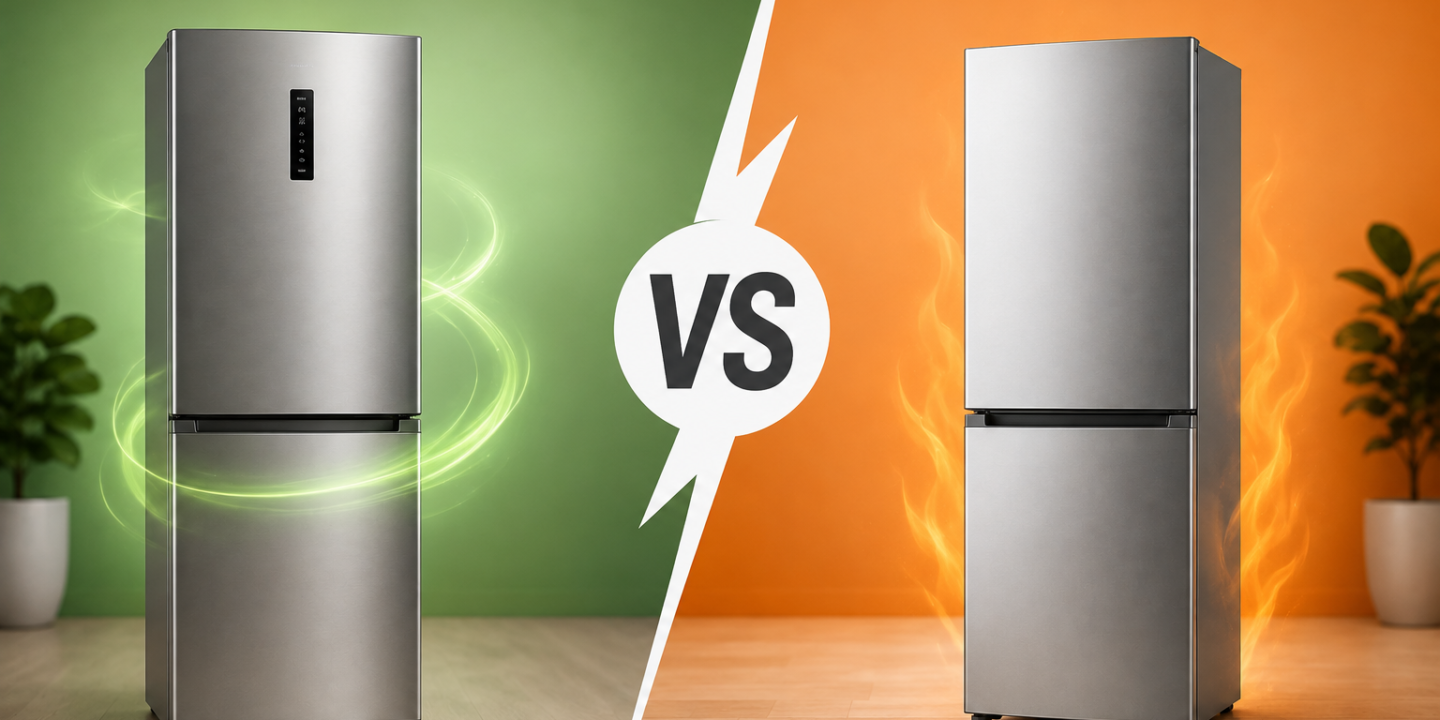
Inverter vs Non-Inverter Refrigerator: Which Is Better for Nigerian Homes?
If you are planning to buy a new refrigerator in Nigeria, one question you may have come across is this: Should I buy an inverter refrigerator or a non-inverter refrigerator?
At first, the difference may not seem like a big deal. Both types of refrigerators can keep your food and drinks cold. Both are available in different sizes, brands and designs. However, the technology used by the compressor can affect how the refrigerator uses electricity, how often the compressor switches on and off, how quietly it operates and how much value you get from it over time.
This matters even more in Nigeria, where electricity costs, power supply, voltage fluctuations and the use of generators or alternative power sources can influence the cost of running household appliances.
So, which is better: an inverter refrigerator or a non-inverter refrigerator?
For many Nigerian households, an inverter refrigerator is the better long-term choice if the higher purchase price fits your budget. However, a non-inverter refrigerator can still make sense if your priority is a lower upfront cost or if you do not need the additional efficiency features of an inverter model.
However, in this guide, we will explain the difference and help you decide which refrigerator is right for your home.
Quick Answer: Inverter Refrigerator vs Non-Inverter Refrigerator
If you want the short answer before reading the full comparison, here it is:
| Feature | Inverter Refrigerator | Non-Inverter Refrigerator |
|---|---|---|
| Compressor operation | Adjusts speed according to cooling demand | Generally runs at a fixed speed |
| Electricity use | Usually more efficient | Usually less efficient |
| Noise | Generally quieter | Can be louder when compressor starts |
| Temperature control | More consistent | More cycling between cooling and stopping |
| Purchase price | Usually higher | Usually lower |
| Long-term running cost | Potentially lower | Potentially higher |
| Best for | Regular daily use and long-term savings | Buyers prioritizing lower initial cost |
The important thing is that inverter technology does not automatically make every refrigerator better in every situation. Capacity, insulation, cooling system, energy efficiency, brand quality, usage habits and the condition of your home’s electrical supply also matter.
What Is an Inverter Refrigerator?
An inverter refrigerator uses an inverter-controlled compressor that can adjust its operating speed according to how much cooling is required.
Instead of simply switching between full operation and being completely off, the compressor can slow down when the refrigerator has reached the desired temperature and increase its output when more cooling is needed.
For example, imagine you have just opened the refrigerator several times while preparing breakfast. Warm air enters the compartment, so the refrigerator needs more cooling. As a result, the compressor increases its operation to bring the temperature back down.
Later, when the door remains closed and the temperature is stable, the compressor can reduce its speed rather than continuously operating at maximum capacity.
This variable-speed operation is one of the major reasons inverter refrigerators are generally associated with energy efficiency and quieter operation.
How Does an Inverter Compressor Work?
The easiest way to understand it is to think of driving a car.
However, you do not normally drive at maximum speed all the time. You accelerate when necessary and slow down when you have reached your desired speed.
Additionally, an inverter compressor works on a similar principle.
It adjusts its cooling output based on demand.
That means the refrigerator does not always need to operate at full capacity just to maintain the temperature inside.
For a household that uses the refrigerator every day, this can be useful because the appliance spends a large amount of time maintaining an already-cold temperature rather than constantly starting from room temperature.
What Is a Non-Inverter Refrigerator?
A non-inverter refrigerator generally uses a conventional compressor that operates at a fixed speed.
When the temperature inside the refrigerator rises above the set level, the compressor switches on and runs at its designed operating speed.
Once the desired temperature is reached, the compressor switches off.
When the temperature rises again, it switches back on.
This repeated starting and stopping is commonly called compressor cycling.
The system is straightforward and has been used in refrigerators for many years. It does not mean that a non-inverter refrigerator is bad.
In fact, a good conventional refrigerator can still provide reliable cooling and serve a household for years when it is properly maintained.
The main difference is how the compressor manages cooling demand.
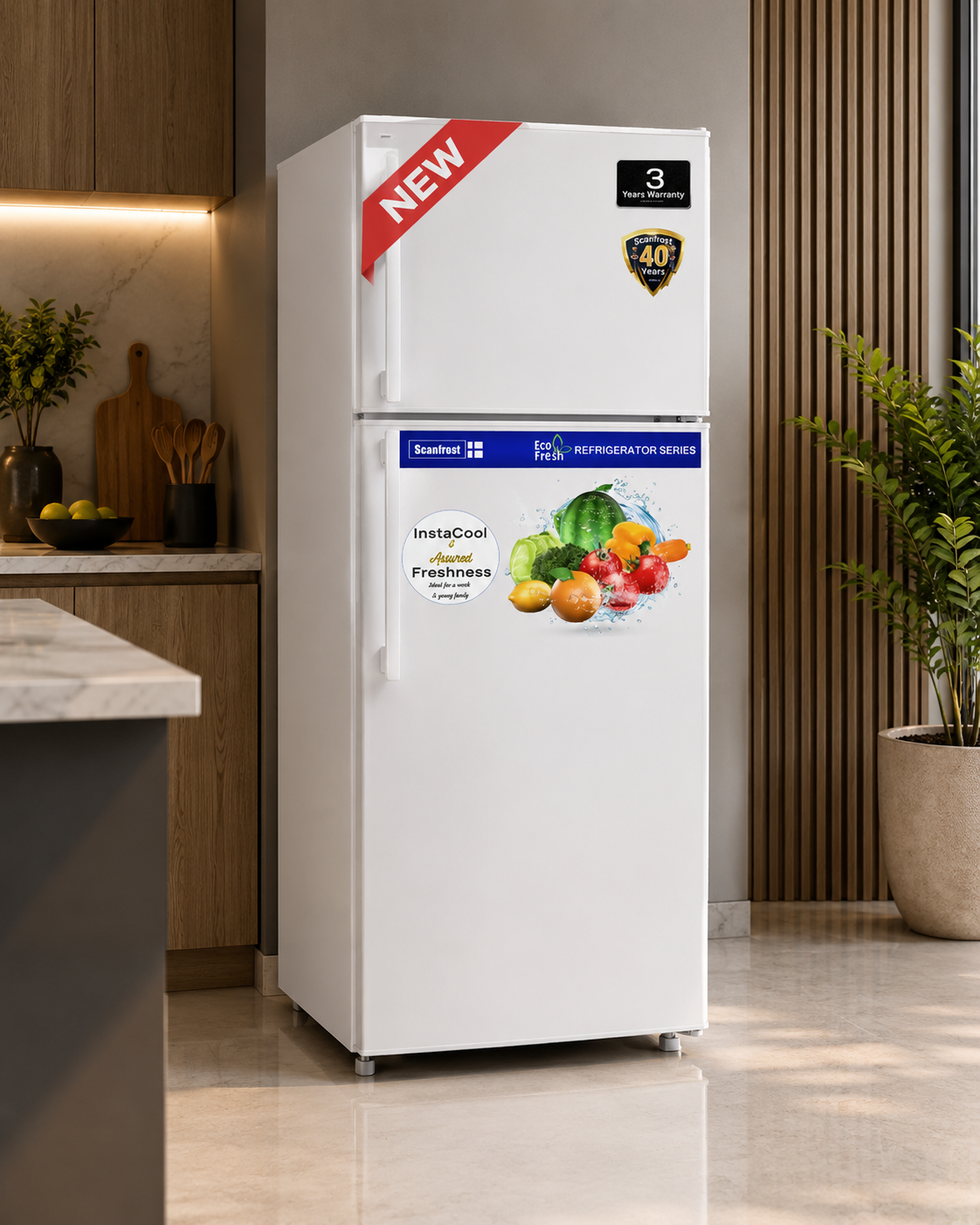 the Scanfrost SFR300DM is a 300L Direct Cool refrigerator with mechanical temperature control, while inverter models such as the TORNADO 351L use inverter compressor technology.
Inverter Refrigerator vs Non-Inverter Refrigerator: The Main Differences
Now let’s compare the two technologies based on the things that matter most to Nigerian buyers.
1. Electricity Consumption
This is probably the biggest reason people search for inverter refrigerator vs non-inverter refrigerator.
An inverter compressor can adjust its speed depending on the cooling requirement. Because of this, inverter refrigerators are generally designed to operate more efficiently than conventional fixed-speed models.
However, you should be careful with claims such as “an inverter fridge will cut your electricity bill by exactly 50%.”
Actual electricity consumption depends on the refrigerator’s size, model, efficiency, room temperature, how frequently you open the door, how full it is, the temperature setting and other factors.
For example, a large 600-litre refrigerator may consume more electricity than a smaller 200-litre inverter model even though both use inverter technology.
Therefore, when shopping, don’t look at the word inverter alone. Check the manufacturer’s energy information and specifications for the specific model.
2. Performance During Nigeria’s Hot Weather
Nigeria’s climate makes cooling performance particularly important.
When the surrounding temperature is high, a refrigerator may need to work harder to maintain a cold internal temperature.
An inverter compressor can adjust its speed according to the cooling demand, which can be useful when the refrigerator is working harder.
Still, inverter technology should not be treated as a guarantee that a particular refrigerator will perform perfectly in every environment.
The refrigerator’s insulation, condenser design, ventilation, capacity and overall build quality also matter.
For this reason, give the appliance enough space around its ventilation areas and avoid placing it directly beside a cooker or another major heat source.
3. Noise Level
Another advantage commonly associated with inverter refrigerators is quieter operation.
Because the compressor can run at lower speeds instead of repeatedly starting at full speed, there may be less noticeable compressor noise.
This can be useful if your refrigerator is close to your living room, bedroom or open-plan kitchen.
A conventional refrigerator can still operate quietly, but you may notice the compressor starting and stopping more clearly.
4. Temperature Stability
An inverter refrigerator can continuously adjust cooling output to maintain a more stable internal temperature.
This is useful for households that store fresh vegetables, fruits, dairy products, drinks and other foods that benefit from consistent refrigeration.
A conventional refrigerator also regulates temperature, but it generally relies on the compressor switching on and off.
So, if consistent temperature control is important to you, inverter technology can be an advantage.
5. Purchase Price
This is where the decision becomes more interesting.
Inverter refrigerators often cost more upfront because they use more advanced compressor technology and may come with additional features.
A non-inverter refrigerator may therefore be more attractive if you have a tight budget and need a functional fridge without paying extra for inverter technology.
However, don’t look only at the price tag.
Think about the total cost of ownership.
A cheaper refrigerator that consumes more electricity may cost you more to operate over several years.
On the other hand, a more expensive inverter refrigerator may offer better efficiency during regular use.
So ask yourself:
Am I looking for the cheapest refrigerator to buy, or the better-value refrigerator to own?
Those are not always the same thing.
Is an Inverter Refrigerator Better for Nigeria?
For many Nigerian households, yes—but there is a little more to consider.
Electricity costs are an important part of household budgeting. Many homes also rely on generators, inverters, solar systems or other backup power solutions when public electricity supply is unavailable.
Because refrigerators operate continuously throughout the day, energy efficiency can matter more than it does with appliances that are used for only a few minutes at a time.
An efficient refrigerator can therefore be attractive to households that want to manage long-term energy consumption.
However, an inverter refrigerator is not a substitute for a reliable electrical protection system.
If your area experiences frequent voltage fluctuations, consider using appropriate voltage protection equipment recommended for the refrigerator and follow the manufacturer’s installation requirements.
Also, never assume that because a refrigerator has “inverter” in its name, it can automatically tolerate every type of unstable power supply.
Always check the manufacturer’s voltage requirements and operating specifications.
Does an Inverter Refrigerator Work During Power Outages?
This is a very important question for Nigerian buyers.
No refrigerator—whether inverter or non-inverter—creates electricity by itself.
If there is no power supply, the refrigerator needs an alternative source such as a generator, solar system, inverter battery system or another suitable power source.
However, some refrigerator models have features designed to help retain cold temperatures during an outage.
For example, a Samsung 393-litre refrigeratorr currently listed on GrowMarketPlus includes Cool Pack technology that is described as retaining freezing temperatures for up to 12 hours during power outages.
That feature is different from the refrigerator being an inverter refrigerator.
In other words:
Inverter technology = how the compressor operates.
Backup power = how the refrigerator receives electricity.
Do not confuse the two.
Inverter Refrigerator vs Non-Inverter Refrigerator: Which Uses Less Electricity?
In general, an inverter refrigerator is designed to use electricity more efficiently because the compressor can adjust its speed instead of repeatedly operating at a fixed speed.
However, the actual difference depends on the specific models being compared.
A small, well-insulated non-inverter refrigerator can use less electricity than a poorly designed or over sized inverter model.
That is why the smartest approach is to compare:
- Refrigerator capacity
- Energy efficiency information
- Compressor technology
- Cooling system
- Insulation
- Usage requirements
- Manufacturer specifications
- Ìwé-ẹ̀rí
- Price
- Availability of spare parts and service
Don’t buy based on the word “inverter” alone.
Are Inverter Refrigerators More Durable?
Inverter refrigerators can be designed for long-term use, but you should not automatically assume that every inverter model will last longer than every non-inverter model.
Durability depends on the quality of the compressor, electronics, materials, installation, maintenance and operating conditions.
A reputable brand with good after-sales support can be a better investment than an unknown refrigerator simply because it is advertised as an inverter model.
Before buying, check the warranty carefully.
For example, the Scanfrost 365-litre Frost-Free Inverter Refrigerator currently listed on GrowMarketPlus includes a 2-year body warranty and a 10-year inverter motor warranty according to its product information.
That kind of warranty information is worth checking when comparing refrigerators.
Which Is Better for a Small Nigerian Apartment?
If you live alone or with one other person, you may not need a huge side-by-side refrigerator.
Instead, focus on:
- Appropriate capacity
- Energy efficiency
- Available kitchen space
- Noise level
- Your budget
- Your actual food storage needs
A compact or medium-sized refrigerator can be more practical than paying for a very large model that you rarely fill.
If you are shopping for refrigerators on GrowMarketPlus, you can compare different capacities and designs in the refrigerator collection rather than choosing based only on compressor technology.
Which Is Better for a Large Family?
For a large family, capacity becomes extremely important.
If you regularly buy groceries in bulk, store drinks, keep frozen meat, preserve vegetables or prepare meals ahead of time, a larger refrigerator may be more suitable.
In this situation, an inverter refrigerator can be particularly attractive because the appliance may be operating for long periods every day.
GrowMarketPlus currently lists larger inverter options, including the Scanfrost 500-litre Frost-Free Inverter Refrigerator and the Scanfrost 650-litre Intelli Inverter Side-by-Side Refrigerator.
However, always measure your kitchen space before ordering a large appliance.
Remember to account for door clearance and ventilation space as well.
What About Refrigerator Prices in Nigeria?
The price of a refrigerator in Nigeria can vary significantly.
Factors such as brand, capacity, compressor technology, door configuration, cooling technology, warranty and additional features all influence the final price.
For example, refrigerators currently listed on GrowMarketPlus range from compact models to large-capacity French-door and side-by-side refrigerators.
Inverter models can command a higher upfront price, but that does not necessarily mean they are more expensive overall.
When comparing prices, think about:
Purchase price + electricity cost + maintenance + expected lifespan = total ownership cost.
That is a much better way to decide than simply choosing the cheapest model available.
Inverter Refrigerator vs Non-Inverter: Pros and Cons
Advantages of Inverter Refrigerators
- Better energy efficiency in many models
- Variable compressor speed
- Generally quieter operation
- More consistent cooling
- Suitable for households that use a refrigerator continuously
- Can offer better long-term value when energy savings justify the higher purchase price
Disadvantages of Inverter Refrigerators
- Usually higher upfront cost
- Electronic components can make repairs more specialized
- Replacement parts may be more expensive for some models
- Performance still depends on the quality of the specific refrigerator
- Inverter technology does not eliminate the need for proper voltage protection
Advantages of Non-Inverter Refrigerators
- Usually cheaper to purchase
- Familiar technology
- Straightforward compressor operation
- Many reliable models are available
- Can be suitable for buyers who prioritize initial affordability
Disadvantages of Non-Inverter Refrigerators
- Compressor cycles on and off
- May use more electricity depending on the model and usage
- Can produce more noticeable compressor-start noise
- May have less precise temperature management than some inverter models
What Should Nigerians Check Before Buying a Refrigerator?
Whether you choose inverter or non-inverter, don’t rush the purchase.
Here are the most important things to check.
Refrigerator Capacity
Think about the number of people in your household and how much food you normally store.
A small household may be comfortable with a compact refrigerator, while a large family may need 400 liters, 500 liters or more.
Available Kitchen Space
Measure your available space before buying.
Check:
- Height
- Width
- Depth
- Door opening space
- Ventilation space
- Entrance and stairway access
A refrigerator can be the perfect size internally but still be difficult to move into your home.
Ìfàṣẹ́jú agbára
If reducing electricity consumption is important to you, pay close attention to the manufacturer’s energy information.
Do not rely solely on marketing phrases.
Compressor Type
Check whether the model uses an inverter compressor or a conventional compressor.
If it is an inverter model, confirm the exact technology and warranty.
Voltage Requirements
This is particularly important in Nigeria.
Check the manufacturer’s recommended operating voltage and speak with a qualified technician about suitable voltage protection if your location experiences unstable power.
Ìwé-ẹ̀rí
A warranty can save you from unexpected expenses.
Check what is covered, how long the warranty lasts and whether compressor coverage differs from body or parts coverage.
After-Sales Support
A refrigerator is a long-term appliance.
Before buying an expensive model, consider whether you can easily access authorized service and replacement parts.
Which Refrigerator Should You Buy?
The answer depends on your priorities.
Choose an inverter refrigerator if:
- You use your refrigerator every day.
- You want to prioritize energy efficiency.
- You are comfortable paying more upfront.
- You prefer quieter operation.
- You want more consistent cooling.
- You are thinking about long-term ownership rather than only the initial price.
Choose a non-inverter refrigerator if:
- Your budget is limited.
- You want a lower upfront purchase price.
- Your refrigeration needs are relatively simple.
- You have found a reliable conventional model at a good price.
- Long-term energy efficiency is less important to you than initial affordability.
For many households, however, an inverter model is worth considering because a refrigerator is one of those appliances that stays on continuously.
Recommended Inverter Refrigerators to Consider
If you have decided that inverter technology suits your needs, GrowMarketPlus has several options worth comparing.
Scanfrost 365L Frost-Free Inverter Refrigerator
The Scanfrost 365-litre model offers Intelli Inverter Technology, frost-free operation, multi-airflow cooling and low-voltage operation according to its current product information. It is positioned as an option for medium-sized households.
Best for: Medium-sized Nigerian households looking for a combination of capacity and energy-efficient features.
Scanfrost 500L Frost-Free Inverter Refrigerator
The 500-litre Scanfrost model provides more storage space and includes Intelli Inverter Technology, frost-free operation, shower cooling and multi-airflow cooling.
Best for: Families that need more refrigerator and freezer storage.
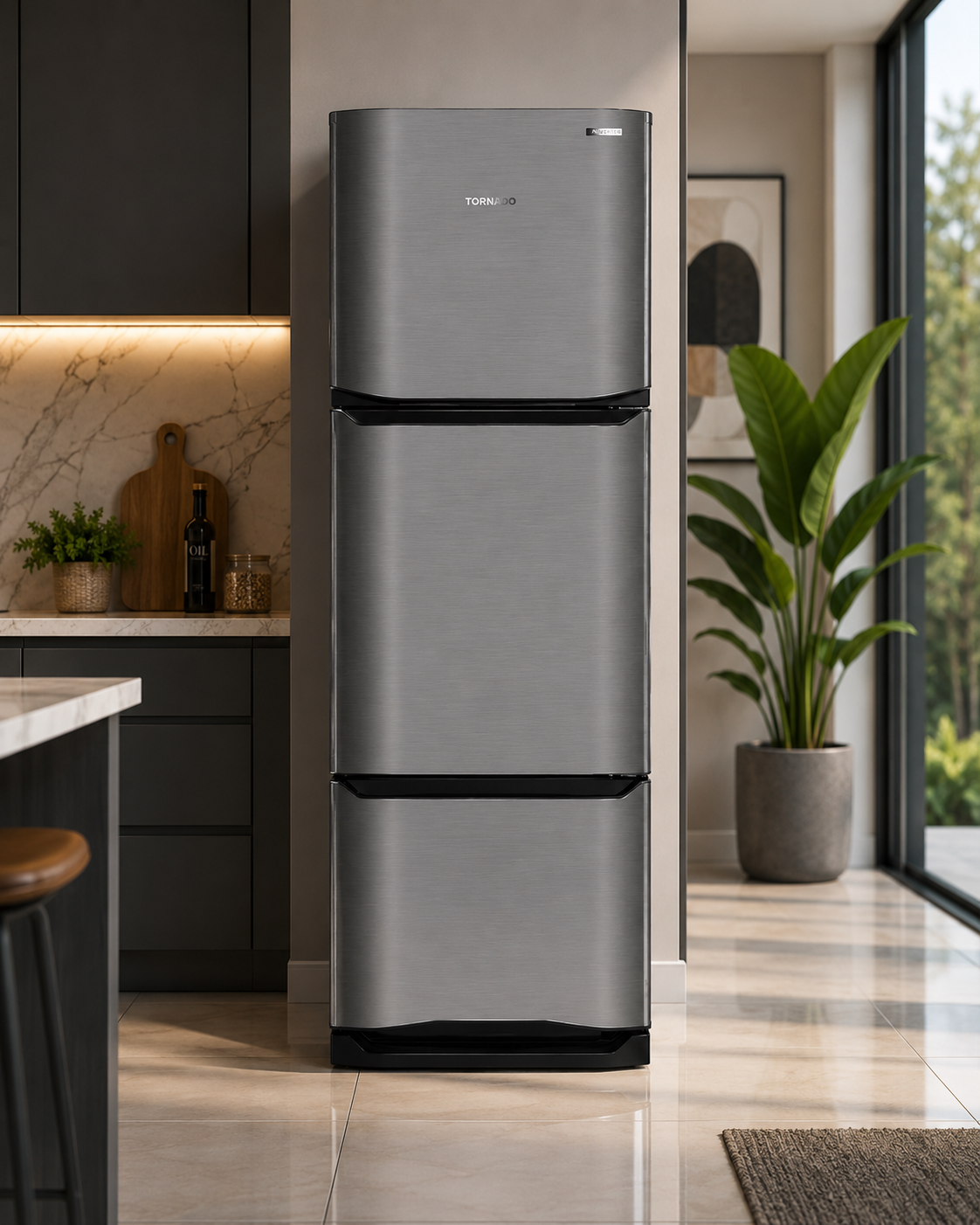
TORNADO 351L Inverter No Frost Refrigerator
The TORNADO 351-litre model listed on GrowMarketPlus combines inverter compressor technology with a three-door design and No Frost cooling.
Best for: Buyers who want a modern multi-door refrigerator with inverter technology.
Samsung 393L Top Mount Freezer Refrigerator
This Samsung model features a Digital Inverter Compressor, SpaceMax technology, Multi-Airflow cooling, Frost-Free operation and Cool Pack technology.
Best for: Medium to large households that want a recognized brand with multiple cooling and storage features.
Final Verdict: Inverter or Non-Inverter Refrigerator?
So, which is better: inverter refrigerator vs non-inverter refrigerator?
For most people looking for a refrigerator for long-term daily use, an inverter refrigerator is generally the stronger choice if the purchase price fits the budget.
Its variable-speed compressor can improve energy efficiency, reduce compressor noise and provide more consistent cooling.
But don’t make the decision based on the word inverter alone.
The best refrigerator for your home is the one that matches your household size, budget, kitchen space, electricity situation, storage needs and expected usage.
If you are on a tight budget, a good non-inverter refrigerator can still serve you well.
On the other hand, if you want to reduce long-term running costs and you use your refrigerator heavily, an inverter model deserves serious consideration.
Before making your final decision, compare the capacity, specifications, warranty, energy information and price of the exact models you are considering.
Frequently Asked Questions About Inverter Refrigerators
Is an inverter refrigerator better than a normal refrigerator?
For many households, an inverter refrigerator can offer advantages such as improved energy efficiency, quieter operation and more consistent cooling. However, a good non-inverter refrigerator can still be a reliable and affordable choice.
Does an inverter refrigerator consume less electricity?
Generally, inverter refrigerators are designed to operate more efficiently because their compressors can adjust speed according to cooling demand. Actual electricity consumption depends on the specific model, capacity, usage and environmental conditions.
Are inverter refrigerators good for Nigerian homes?
Yes. Inverter refrigerators can be a good choice for Nigerian homes, particularly for households that use their refrigerator continuously and want to manage electricity consumption. Buyers should still check the model’s voltage requirements and use appropriate electrical protection where necessary.
Can an inverter refrigerator work without NEPA electricity?
No. An inverter refrigerator still requires electricity. During a power outage, it needs a suitable alternative power source such as a generator, solar system or battery-backed inverter system.
Does an inverter refrigerator work better during power fluctuations?
Inverter technology does not automatically mean a refrigerator can tolerate every type of voltage fluctuation. Check the manufacturer’s specifications and use appropriate voltage protection where recommended.
Are inverter refrigerators more expensive?
They can be more expensive upfront than comparable conventional models. However, the higher initial cost may be worthwhile for buyers who value energy efficiency and long-term ownership.
How long can a refrigerator last in Nigeria?
The lifespan of a refrigerator depends on the model, build quality, maintenance, electrical conditions, installation and usage. Proper ventilation, voltage protection and regular maintenance can help support reliable operation.
What size refrigerator is best for a Nigerian family?
There is no single ideal size for every family. Consider the number of people in your household, how frequently you shop and whether you store food in bulk. Small households may prefer compact models, while larger families may need 400 liters or more.
Should I buy an inverter refrigerator or save money with a non-inverter model?
If you can comfortably afford the higher purchase price and plan to use the refrigerator for several years, an inverter model may provide better long-term value. If your priority is keeping the initial cost low, a reliable non-inverter model can still be a practical choice.
Shop Refrigerators at GrowMarketPlus
Ready to compare your options?
Explore the refrigerator collection at GrowMarketPlus to compare different capacities, brands, designs and cooling technologies.
Whether you are looking for a compact refrigerator for a single occupant, a family-size fridge, a large side-by-side model or an inverter refrigerator designed with energy efficiency in mind, compare the specifications carefully before you buy.
Choose the refrigerator that fits your home, your budget and the way you live.
Best Refrigerators in Nigeria
Ohun elo Ile
Inverter Refrigerator
Inverter vs Non-Inverter Refrigerators
Non-Inverter Refrigerator
Refrigerator Buying Guide
Awọn firiji
Refrigerators in Nigeria